
In the Same Moments, God Was Moving
Two Hearts. Two Expressions of Worship. One Savior.
By Barbara Ziegler
There are moments in a worship gathering when one photograph cannot tell the whole story. A frame holds movement or stillness, a lifted hand or a bowed head. Beyond its edges, other people are also turning toward Jesus. What we see is only part of what is taking place.
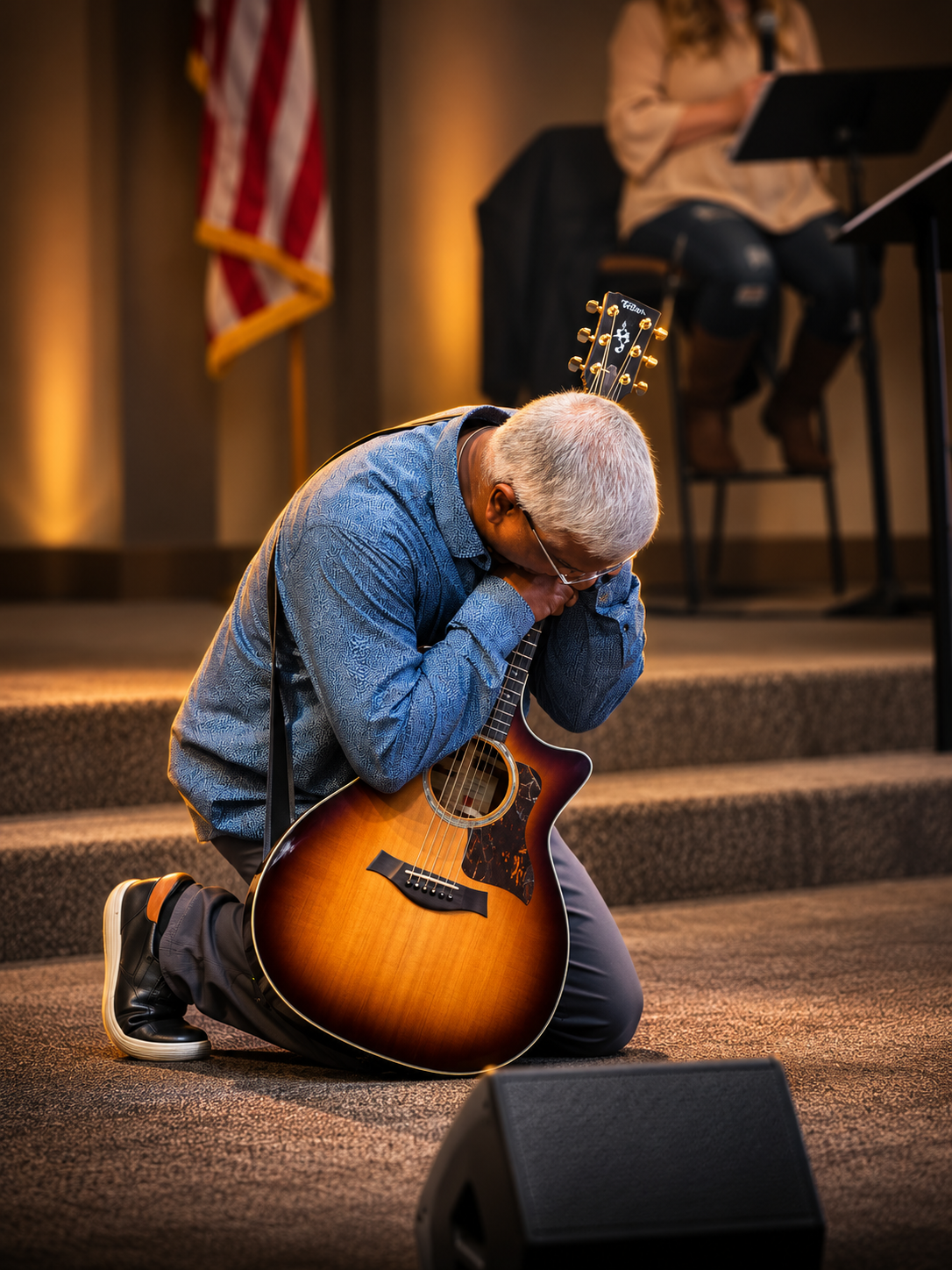
These two images from worship at Simply Jesus Church invite us to look with that humility. In one, a woman worships with flowing, colorful flags. In another, a pastor kneels with his guitar, his head bowed. According to the details shared for this story, these expressions unfolded during the same timeframe—not necessarily at the exact same second.
The woman later shared that something significant happened during her worship. Her complete testimony has not yet been provided. The pastor was also experiencing his own personal moment before the Lord. We do not need to fill in either person's private story to recognize the connection: different hearts, different expressions, the same Savior.
The Worship We See and the Hearts God Knows
We often notice what is easiest to see. Color catches our attention. Movement draws our eyes. A kneeling figure makes us pause. Yet none of these things gives us complete access to another person's heart.
In 1 Samuel 16:7, the Lord corrects Samuel's attention to outward appearance. The passage ends with this reminder: “but the LORD looks at the heart.” — 1 Samuel 16:7 (NKJV)
That truth changes how we approach these photographs. We are not invited to judge whose expression is deeper or whose response is more sincere. We are invited to remember that the Lord knows what the camera cannot tell us.
Jesus places the center of worship beyond its outward form: “God is Spirit, and those who worship Him must worship in spirit and truth.” — John 4:24 (NKJV) Movement and stillness are not competing ways to earn His attention. Both must find their meaning in hearts turned toward Him.
When the Flags Began to Move
The first image holds a vivid expression of worship. Pink, purple, and orange fabric flows around a woman in a floral dress. Her hand holds the flags as their folds extend across the photograph. Warm golden lighting brings their colors into view.
The image records movement, but it does not explain the experience behind that movement. We know from what was shared that something significant happened for her during worship. Until her own account is available, the details belong to her—not to our imagination.
There is room here for gratitude without exaggeration. Her visible expression points us toward a larger question: how do we respond to Jesus with the lives and bodies He has given us? For some, praise finds expression in singing or movement. For others, it takes the form of prayer, a bowed head, or quiet attention to His Word.
The flags are not the source of God's presence. They are part of a person's expression of worship. Jesus remains the One to whom worship is offered.
When the Pastor Knelt With His Guitar
During that same timeframe, another image records a different posture. The pastor is on his knees near the church platform. His head is bowed over an acoustic guitar resting against him. The photograph shows his posture clearly; it does not tell us the words of any prayer or whether music continued elsewhere in the room.
We have been told that this was his own personal moment before the Lord. We can honor that without assigning him a burden, an emotion, or a revelation he has not described.
“Oh come, let us worship and bow down; Let us kneel before the LORD our Maker.” — Psalm 95:6 (NKJV)
This invitation gives a biblical setting for kneeling in worship. It does not make kneeling a test of sincerity. Rather, it reminds us that worship includes humility before our Maker. The guitar and the bowed figure share the frame, but neither is the center of the story. The Lord before whom he kneels is.
Two Expressions of Worship, One Savior
Placed together, these photographs help us hold two moments in view. While one worshiper expressed praise through movement, another knelt before the Lord. Their experiences were personal, but they unfolded within the same gathering.
We should not suggest that one person's response caused the other's. Nor should we make matching outward expressions a condition of unity. Romans 12:4–5 (NKJV) describes many members belonging to one body in Christ. Unity does not erase the distinctness of each person.
The same Lord knew both hearts. He did not need either person to become a copy of the other. Worship centered on Jesus leaves us less concerned with comparing people and more attentive to the One who gathers His people to Himself.
The Holy Spirit's work is not something we can measure by the sweep of a flag or the depth of a bowed head. Scripture calls us to worship in truth, and truth includes the humility to say what we know—and to leave unconfirmed details unspoken.
What the Camera Cannot Capture
A photograph can preserve the shape of a moment. It cannot preserve every thought, every prayer, or the full meaning that moment will later hold for a person. That limitation is not a weakness we must overcome with a more dramatic story.
Psalm 139:1–3 (NKJV) speaks of the Lord's intimate knowledge of a person's sitting, rising, thoughts, and ways. God does not depend on a photograph or a public testimony to know His children. What remains hidden from us is not hidden from Him.
As firsthand accounts become available, they may help us understand more. Until then, we can listen patiently. Respecting someone's testimony means allowing them to tell it, rather than telling it for them.
Perhaps these images can also make us gentler with the people beside us. We may not understand another worshiper's expression. We may not know what they brought into the room. We can still turn our attention toward Jesus and make room for prayer without claiming to know their story.
When the Music Stops, Worship Continues
Eventually, flags are folded and instruments are put away. A gathering ends. The photographs remain, but the invitation to worship does not belong only to the moments they preserve.
Worship continues in the ordinary choices of a life offered to Jesus: speaking truthfully, serving a neighbor, forgiving, praying, and seeking His will when obedience is difficult. Surrender is not only a posture visible in a sanctuary. It is a continuing response to the Lord.
Whether your worship is expressed through song, prayer, movement, or quiet surrender, may your heart always be turned toward Jesus. We invite you to continue discovering what it means to follow Him, worship Him, and make Him known. Learn more about Simply Jesus Church, or continue reading Jesus Talk.
Lord Jesus, help us seek You without comparison. Teach us to honor the hearts we cannot fully understand, to listen before we speak, and to offer You our lives beyond the moments others can see. May our worship be sincere, our words truthful, and our attention fixed on You.
In Gethsemane, Jesus prayed to the Father: “nevertheless not My will, but Yours, be done.” — Luke 22:42 (NKJV)
May that surrender shape our own worship. One Savior. Different hearts. The same moments in time—and lives continuing to glorify Him.
Read next
When the Instrument Falls Silent, the Heart Speaks
A personal testimony from worship at Simply Jesus Church: when the instruments fall silent, a heart surrendered to Jesus still has a song.
Read next →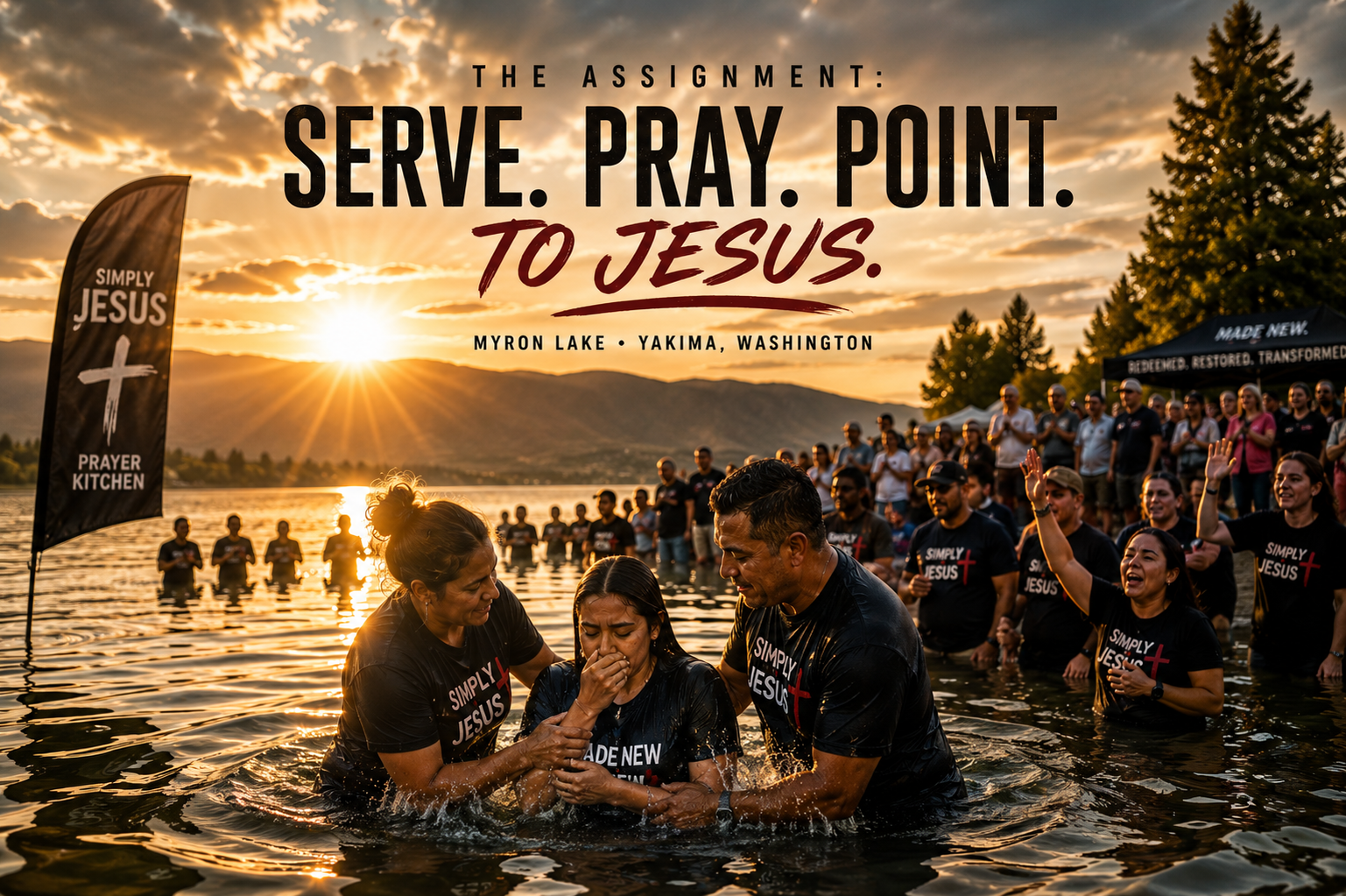
Can You Get Baptized in Yakima Without Joining a Church First?
Yes — baptism in the Bible follows belief, not paperwork. Here's what Scripture actually says, and how to be baptized with us July 25 at Myron Lake.
Read next →
What Is the Purpose of Being Baptized?
Baptism doesn't save you — your faith does. So why does it matter? Here's what baptism actually pictures, and why it's worth doing.
Read next →